
British Columbia windstorms
Recent windstorms affected hundreds of thousands of customers while crews worked to restore service.
When severe weather interrupts power or mobile service, your family needs a communication plan that doesn't depend on a charged phone.
Prepare calmly. Stay connected.
From $99.00. 4 pack: $72.25 per radio.
Set them up before the next storm, while the lights are still on.
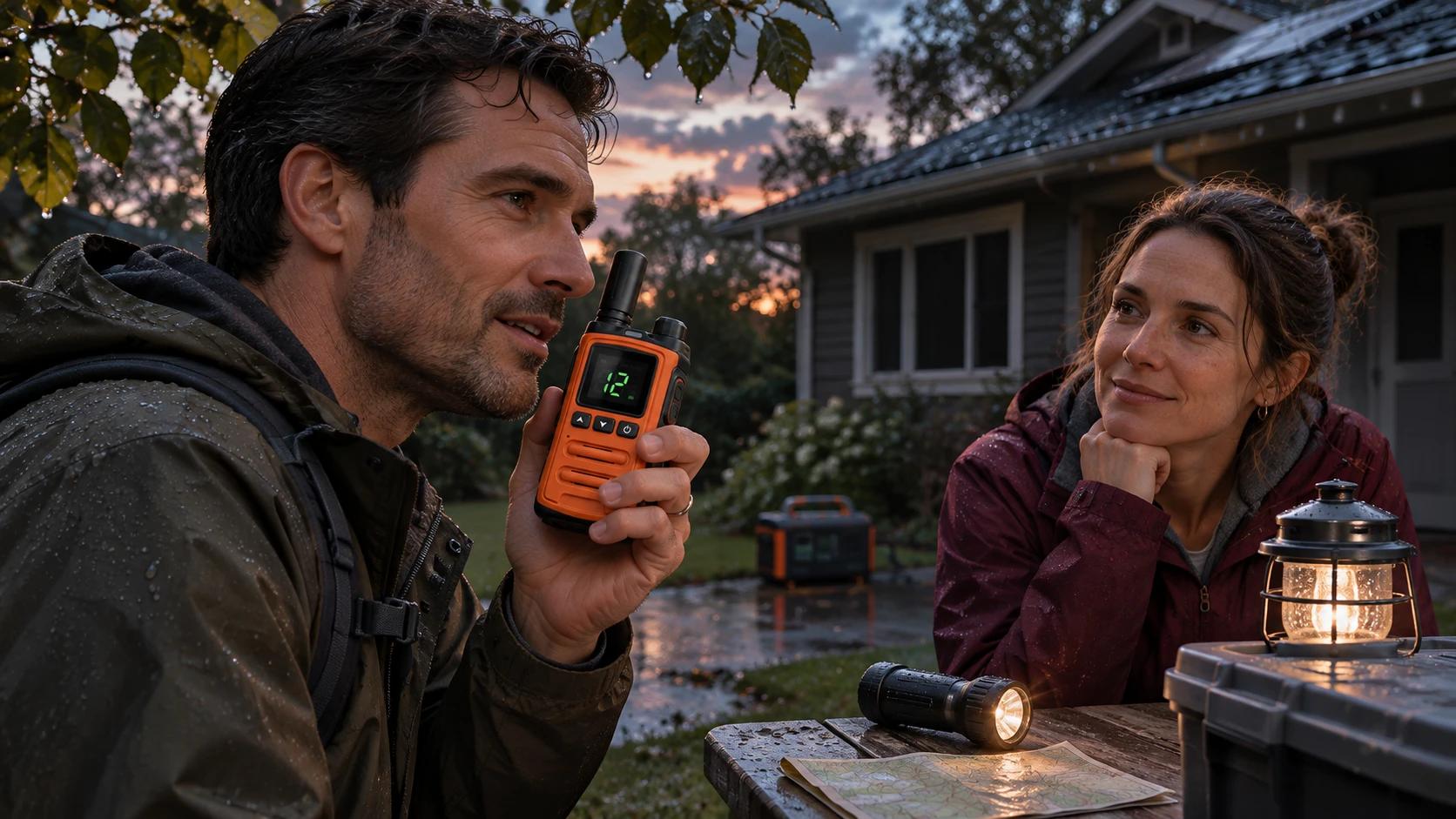
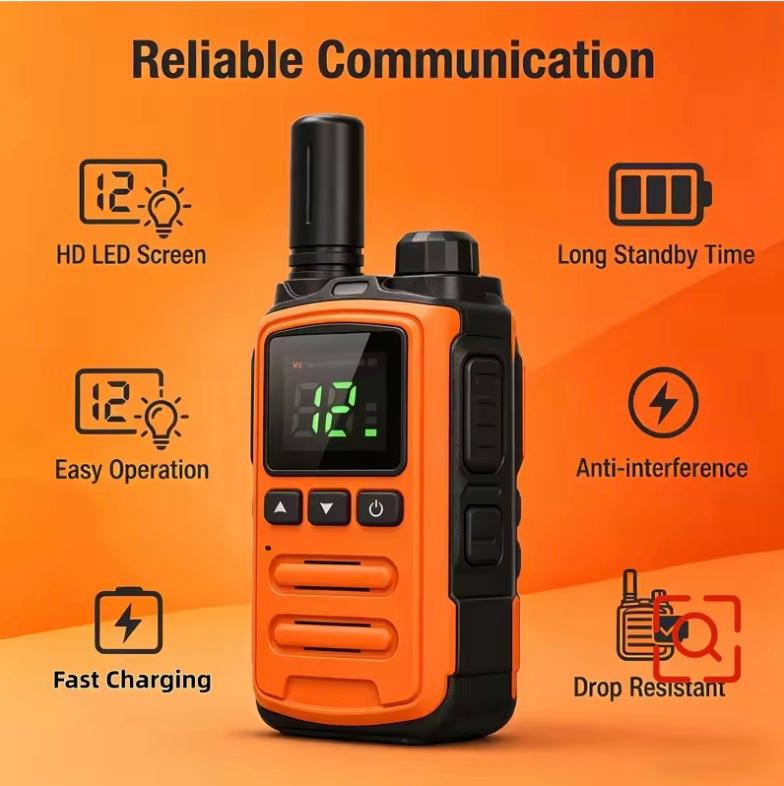
When the power is out and phones go quiet, press to talk to your family on a channel you agreed in advance. No mobile network, Wi-Fi or app needed.
Keep a pair with your emergency supplies and agree on a channel before you need them.
2 radios. $179.00 total, $89.50 per radio.
Quantity 1 means one pack.
Power interruptions can follow windstorms, ice, severe weather and equipment damage.
Recent windstorms affected hundreds of thousands of customers while crews worked to restore service.
NERC's latest winter outlook describes extreme cold and high electricity demand as factors that can challenge grid reliability.
Nobody can predict the next outage. You can decide now how your family will reach each other.
A radio is one part of a preparedness plan.
It does not replace emergency alerts, a battery-powered weather radio or local instructions.
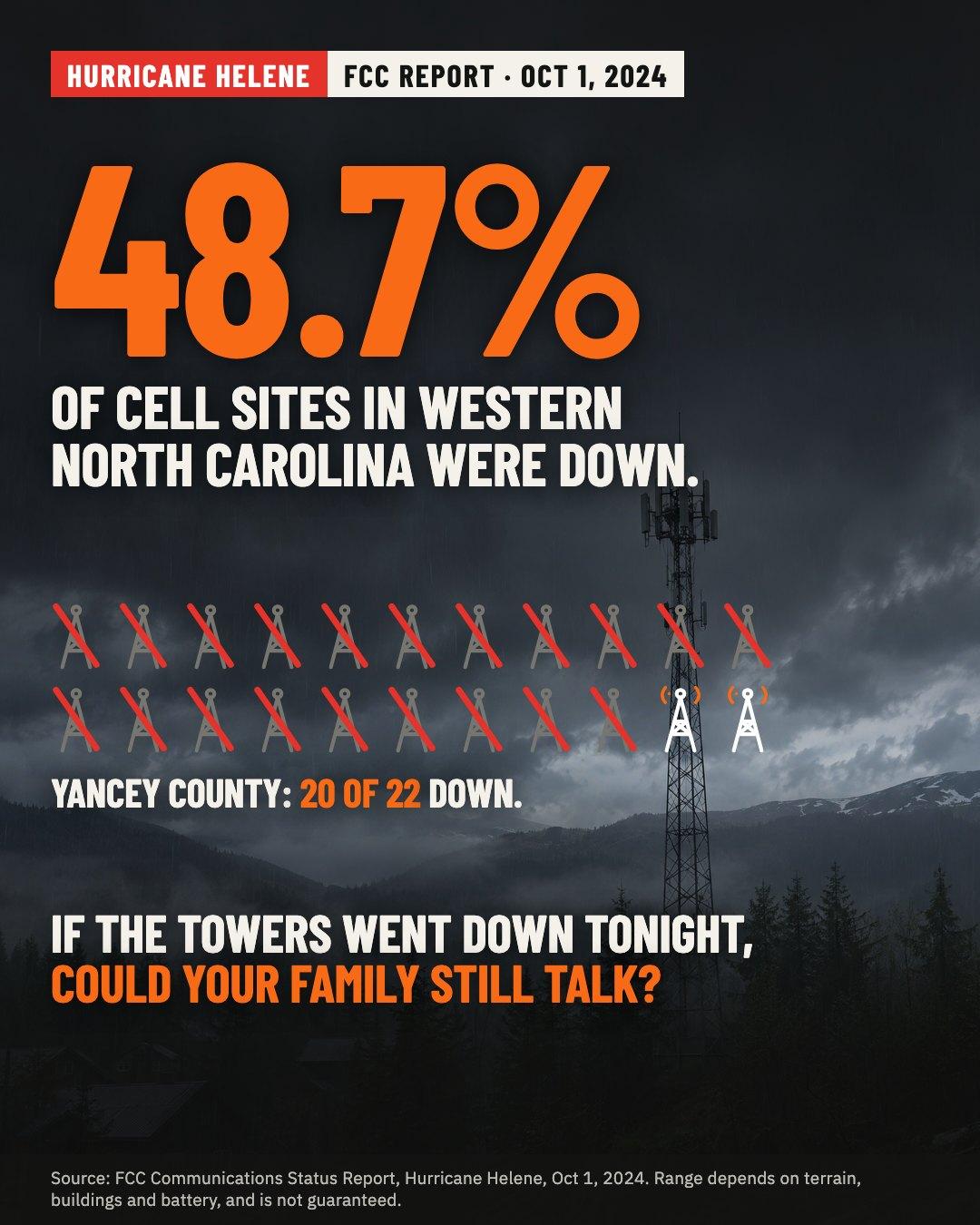
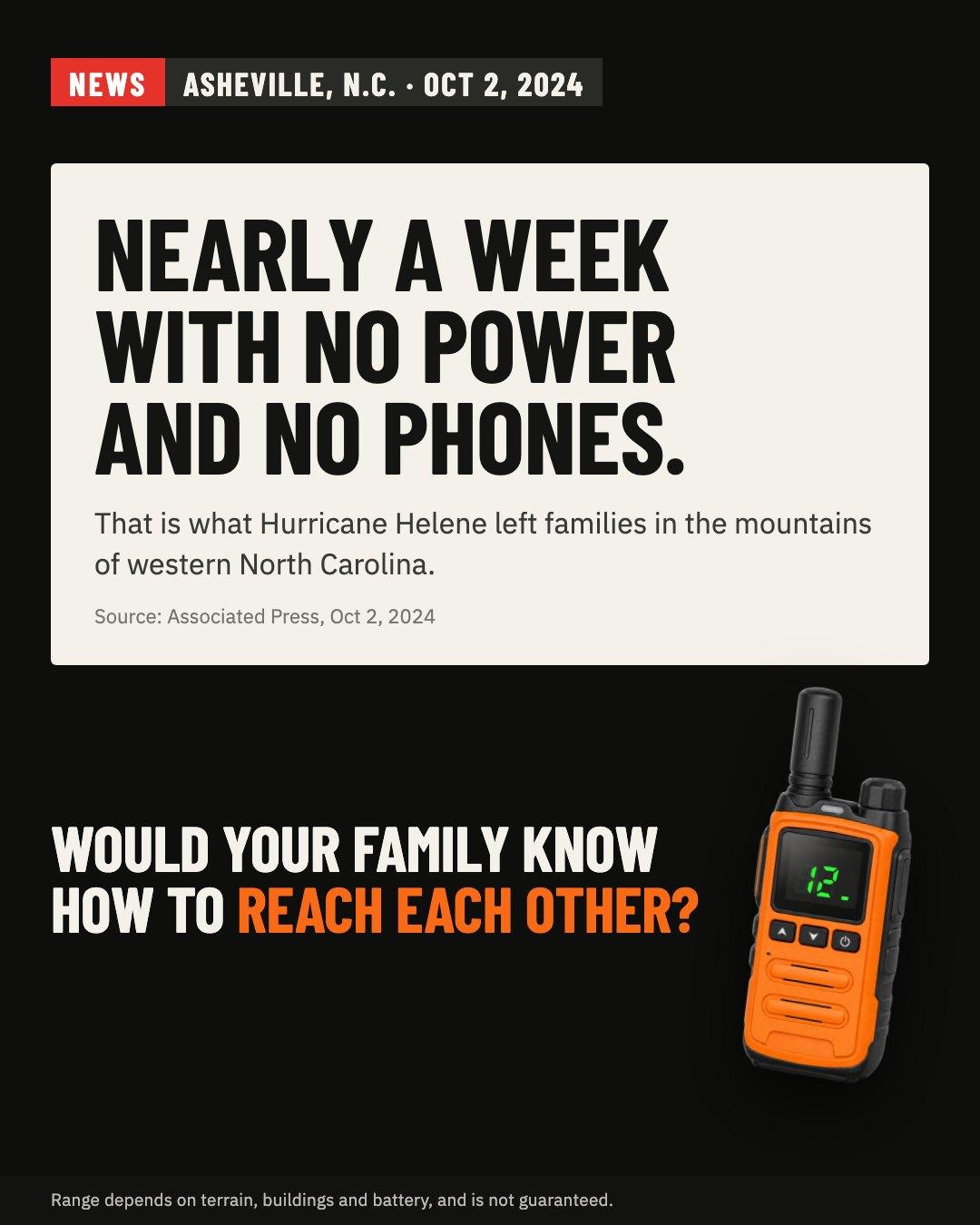
Sources: FCC Communications Status Report for Hurricane Helene, Oct 1, 2024; Associated Press, Oct 2, 2024.
Every outage is different. In each one, the first question is the same: is everyone okay?
Here is where a family radio set fits in three common winter situations.
What can happen
Falling trees and branches can bring down lines. Power can stay off while crews work to restore service, and family members may be in different places when it starts.
How the radios help
Agree a channel and a check-in time so everyone at home, in the yard or close by can report in without relying on a phone.
What can happen
Ice can weigh down lines and branches and make paths and roads slippery. Staying in place is often the safer choice.
How the radios help
Talk between the house, the garage or the neighbor next door without walking across icy ground to ask a question.
What can happen
Extreme cold and high electricity demand can challenge grid reliability. Cold snaps are when checking on people matters most.
How the radios help
Keep short, regular check-ins with relatives nearby to confirm they are warm and safe, and agree when you will talk next to save battery.
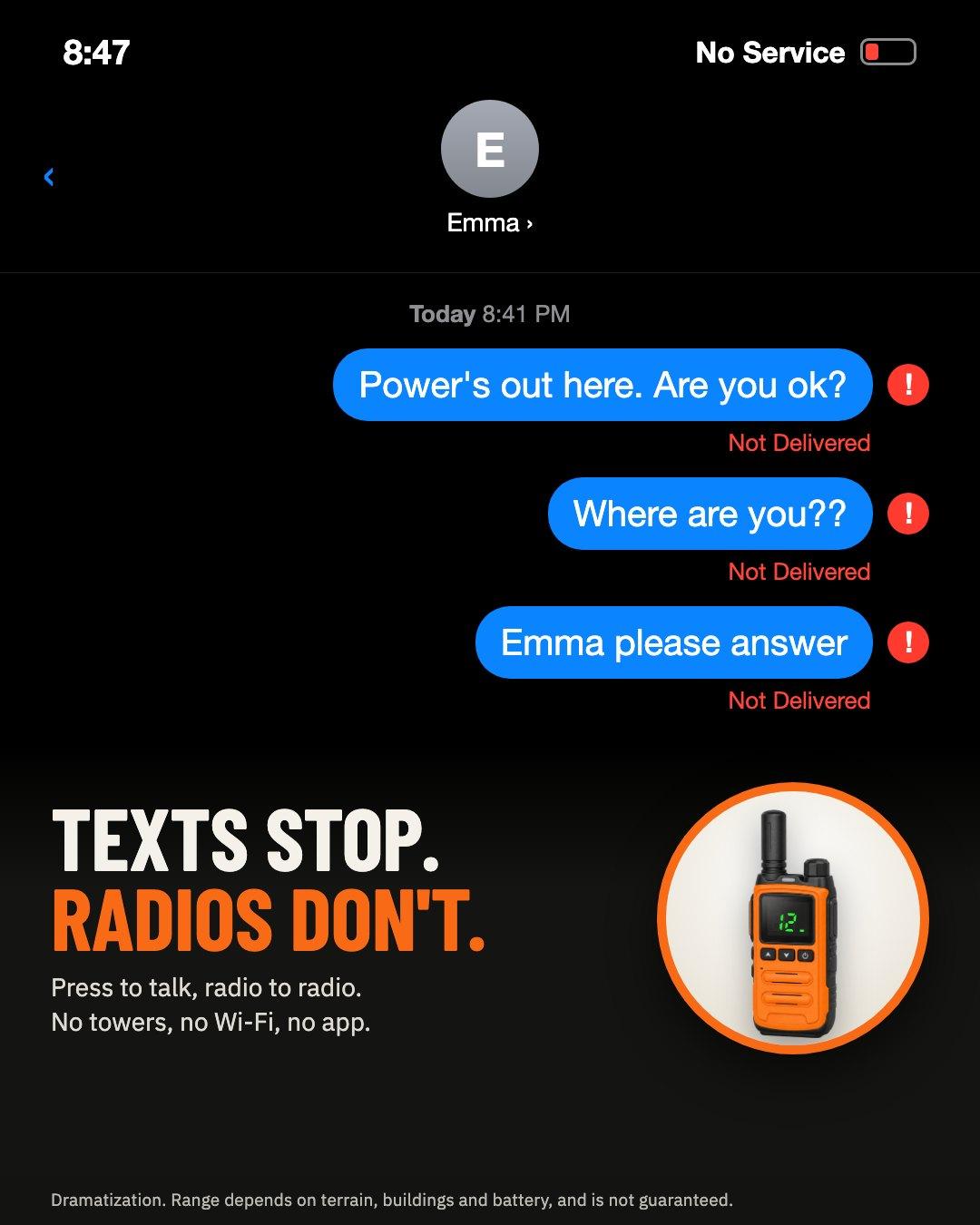
Many families rely on one thing to stay in touch: the phone. When the power goes out, that can be the first thing to fail.
Coverage between radios depends on distance, terrain, buildings, battery charge and applicable radio rules. Range is not guaranteed.
Phone batteries run low
The radios have their own rechargeable batteries. Keep them charged with your kit and save your phone’s battery for when service returns.
Mobile signal drops
Two-way radios talk directly to each other. They do not use a mobile network.
Home internet and Wi-Fi go off
Two radios is the minimum to talk to each other. Pick the pack that covers everyone who may be apart.
A calm routine helps. Agree it now, so nobody has to work it out in the dark.
Stay where you are. Find your flashlight and your emergency kit.
Switch to your primary channel. Everyone at home or nearby answers in turn.
Children, older relatives, anyone outside or away. If someone does not answer, try the backup channel, then follow your plan.
Check official alerts and listen to a battery-powered weather radio for local instructions.
Use battery-saving mode, keep messages brief and switch radios off between agreed check-ins.
Agree the time of the next call before you sign off.
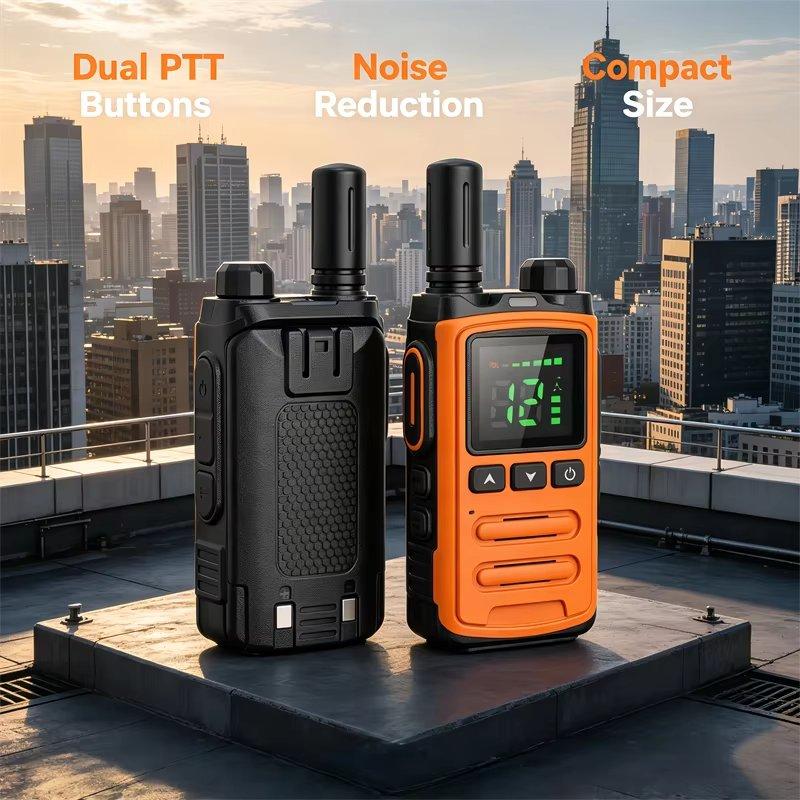
Push to talk. Speak, then release to listen.
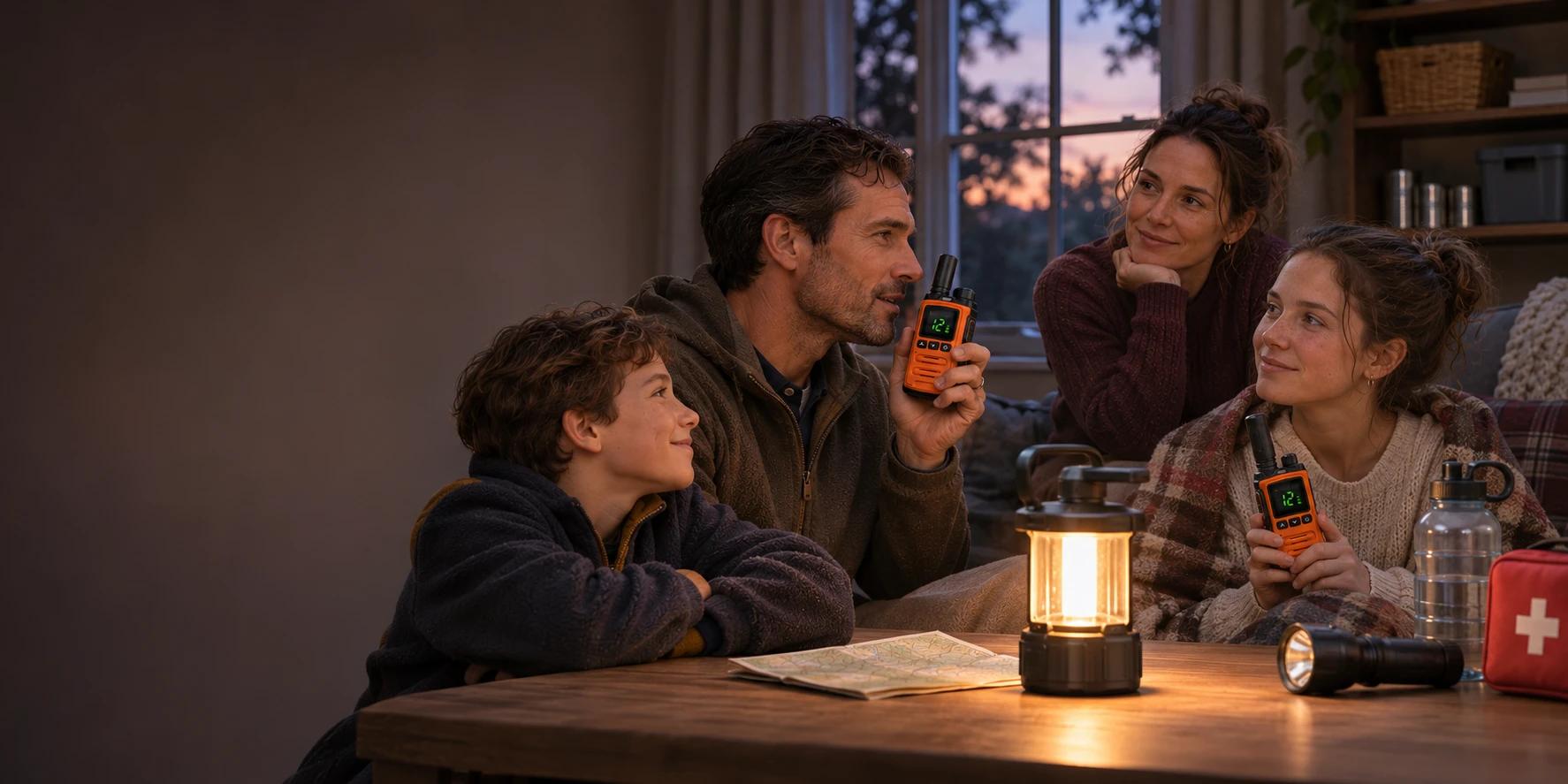
Protecting your family in an outage starts with knowing everyone is okay. A radio makes that question quick to ask.
Give an older child a radio when they are in another room, the basement or the yard. Agree when they check in, and practice together before you need it.
A parent or grandparent close by can keep a radio by their chair. A short check-in at set times tells you they are warm and safe. If a call goes unanswered, check in person.
Stay in touch while someone clears snow, checks the garage, the shed or the far end of the driveway.
Lend a neighbor one radio from a 4 pack and agree a channel, so you can share what you see on your street and check on each other.
Channels are shared.
Anyone on the same channel may hear you. CTCSS/DCS codes reduce chatter but do not make conversations private, so never say the house is empty or share door or alarm codes over the radio.
The 4 pack has the lowest price per radio, with one to lend a neighbor. From $99.00.
A few minutes now makes the radios useful later. Work through this list together when the weather is calm.
Print the free family card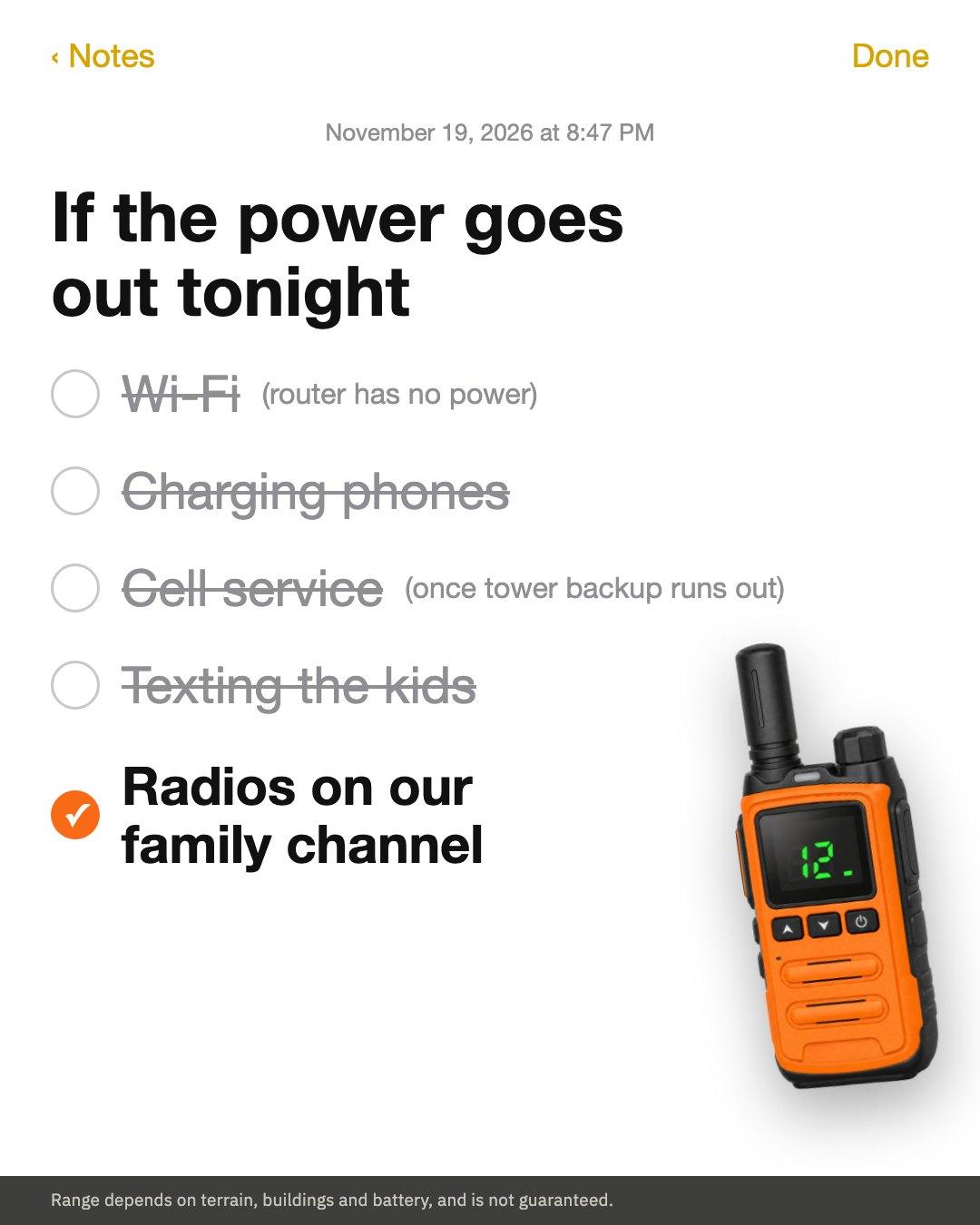
Radios help most when everyone already knows the plan. Agree on these five things together, then keep the radios with your supplies.
Print the free family cardPick a primary channel and a backup channel.
Decide where to meet if you are separated.
Agree when to check in and keep messages brief.
Keep charged radios with your emergency supplies.
Listen to official alerts and local instructions.
If you need to leave, or you are traveling when a storm hits, radios help each group or car stay in touch.
Radio use depends on local coverage, terrain, buildings, battery charge and applicable radio rules. Range is not guaranteed.
No. Two-way radios talk directly to each other and do not use a mobile network, Wi-Fi or an app. How well they reach depends on distance, terrain, buildings and battery charge.
We do not quote a range. Coverage depends on local terrain, buildings, battery charge and applicable radio rules, and range is not guaranteed. Test them at home and around your property before you rely on them.
No. Anyone on the same channel may hear you. CTCSS/DCS codes reduce chatter from other users but do not make conversations private, so keep messages brief and never share sensitive details.
Prepare calmly. Stay connected.
Keep a pair with your emergency supplies and agree on a channel before you need them.
From $99.00. 1 radio, 2 pack or 4 pack.
Radio use depends on local coverage, terrain, buildings, battery charge and applicable radio rules. Range is not guaranteed. A radio does not replace emergency alerts, a battery-powered weather radio or local instructions.
Get ready while the lights are on
Charge the radios, choose a primary and a backup channel, and test them at home.
No mobile
signal needed
16 channels
voice prompts
Rechargeable
USB-C charging
Radio use depends on local coverage, terrain, buildings, battery charge and applicable radio rules. Range is not guaranteed. A radio does not replace emergency alerts, a battery-powered weather radio or local instructions.
No router, app or account needed. Choose your channel and press to talk.
Not everyone has a phone
Push-to-talk with voice prompts is simple to learn, so younger family members can check in too.
Coverage between radios depends on distance, terrain, buildings, battery charge and applicable radio rules. Range is not guaranteed.
No. The radios only talk to other radios on the same channel. Contact emergency services by phone whenever you can, and follow local instructions.
No. A two-way radio is one part of a preparedness plan. It does not replace emergency alerts, a battery-powered weather radio or local instructions.
At least two, because you need one at each end of a conversation. Many families choose one for each person or group that may be apart. The 4 pack has the lowest price per radio.
The radios are rechargeable, with USB-C charging as shown in the product images. Battery-saving mode and a low-battery alert help you manage charge during an outage.
Push-to-talk with voice prompts is simple to learn. Show children how to press, speak and release, practice together, and agree the rules for when they check in.
Radio rules depend on where you live and which channels you use. Read our radio rules page and check your local requirements before use.
Quantity 1 means one pack. Choose 1 radio, a 2 pack or a 4 pack, then set the quantity.